About us
Maths Society is the number one international student society for everyone interested in exploring the wonderful world of maths.
The math-soc website is dedicated to bringing the joy and knowledge of mathematics to people of any age around the globe, through our maths articles and features, events and competitions.
Whether you are just starting to learn about maths, studying or teaching maths at school, at college or university, or just have an interest in recreational maths, we hope you will find something of interest on our collection of resources.
Our free monthly Maths Society newsletter is a regular read for maths enthusiasts worldwide, with fun facts and fascinating features contributed by our mathematically minded members.
Anyone can join our rapidly growing membership to become part of our diverse international community of maths enthusiasts. You can sign up here today.
We also have a range of maths merchandise in our online shop, with badges and mugs, and much more to explore, providing the perfect way to share, express, and celebrate a love of maths. These exclusive Maths Society branded products make great gifts for anyone of any age, with sets to collect, available for delivery worldwide.
AI Solves Navier-Stokes Existence and Smoothness Problem
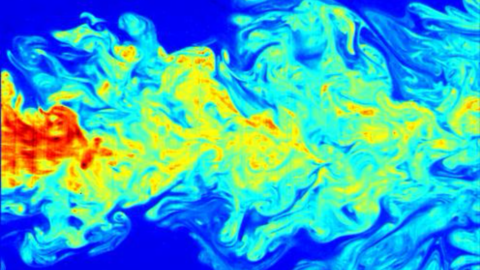
The 90-year-old question of whether the mathematics of fluid dynamics can ‘break down’ has finally been answered. On September 8 2026, OpenAI announced that an internal multi-agent AI system had solved the Navier-Stokes existence and smoothness problem, one of the seven $1 million Millennium Prize Problems established by the Clay Mathematics Institute in 2000.
Million Dollar Question: The Hodge Conjecture
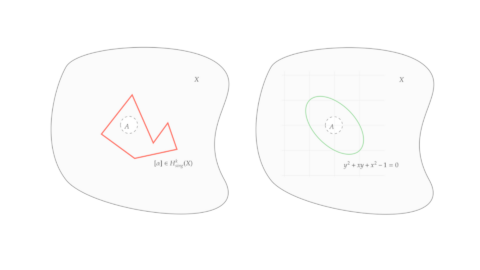
The Hodge Conjecture, one of the Millennium Prize Problems, is one of the most profound unsolved mysteries in maths. It aims to bridge the two major mathematical fields of topology, the study of shapes and data structures, and algebraic geometry, the study of shapes defined by polynomial equations.
Lucky and Unlucky Numbers
Lucky numbers are a perfect example of how humans turn something simple into something meaningful. From a mathematical perspective, numbers don’t have feelings, personalities, or luck attached to them. But people do, and for thousands of years we’ve been assigning meaning to certain digits based on culture, history, and personal experience.
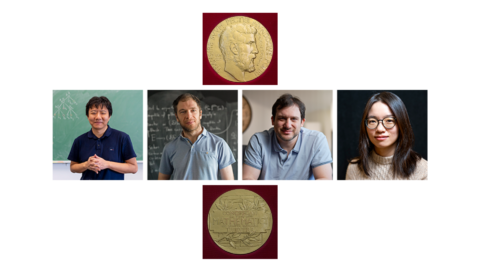
Four Field Medals awarded in Philadelphia
At the 2026 International Congress of Mathematicians in Philadelphia, Fields Medals were awarded to Hong Wang, Yu Deng, John Pardon, and Jacob Tsimerman. Awarded every four years, the 90-year-old prize is widely regarded as the highest honour in mathematics.
Happy Halloween
31 October
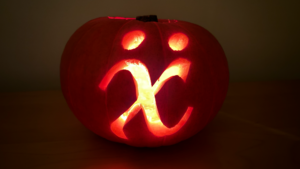
Everyone at Maths Society wishes you a very happy Halloween! Whether you are planning to settle in for a spooky film or dressing up for the night, remember that even if maths seems tricky, it is a proper treat and the best way to scare away any ghouls that happen to be troubling you.