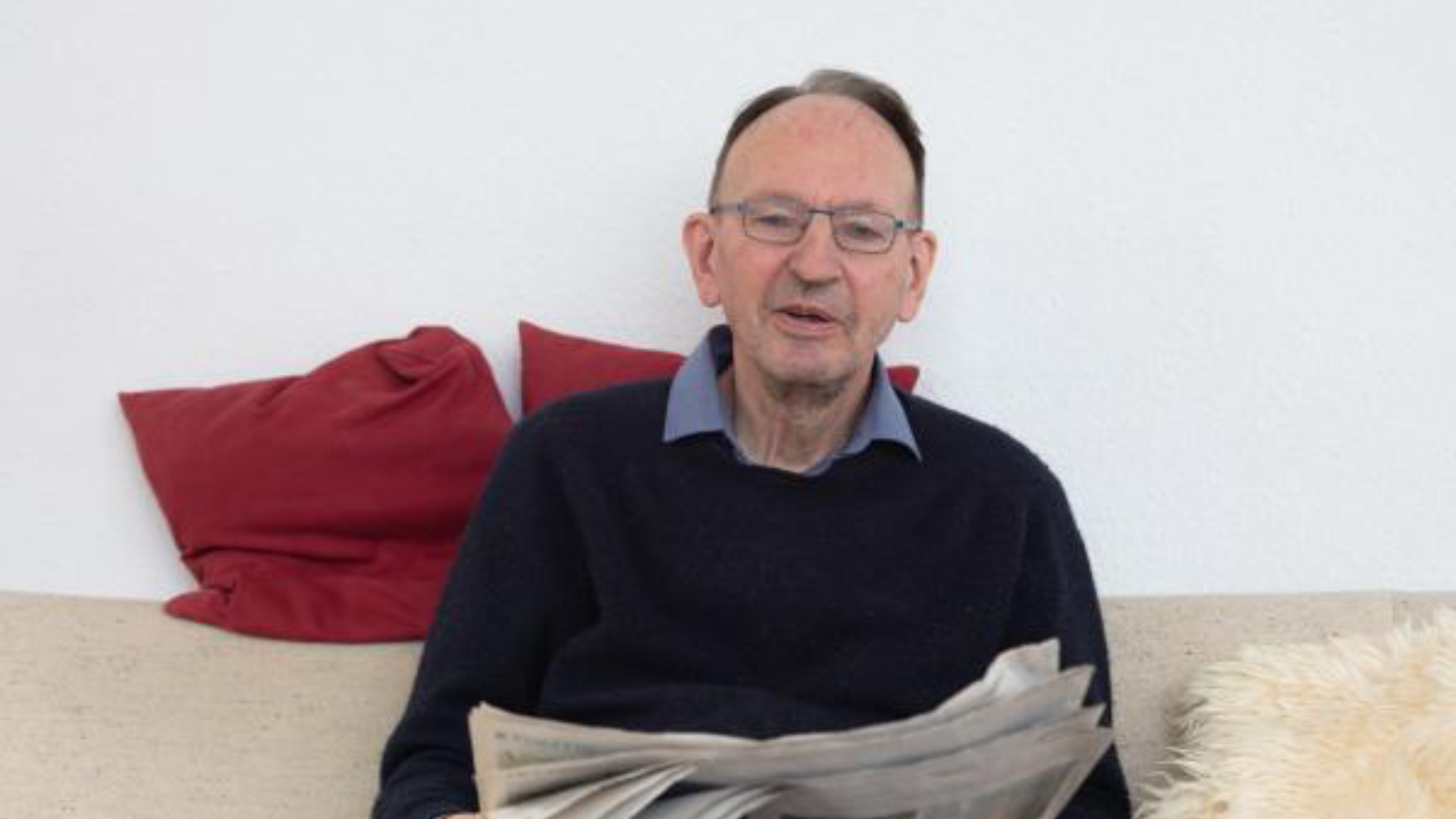
On 26 May, the Norwegian Academy of Science and Letters awarded German mathematician Gerd Faltings, Director Emeritus at the Max Planck Institute for Mathematics in Bonn, the 2026 Abel Prize for his pioneering research into arithmetic geometry.
Widely considered one of the highest honours in contemporary mathematics, often referred to as the ‘Nobel Prize of mathematics’, the Abel Prize recognises an individual’s lifetime achievements and body of work. Faltings was cited by the Abel Committee for “introducing powerful tools in arithmetic geometry and resolving long-standing Diophantine conjectures of Mordell and Lang.”
With this award, Faltings joins an elite group of researchers to have won both of mathematics’ most prestigious accolades, having previously been awarded the Fields Medal in 1986. While the Fields Medal recognises mathematicians under the age of 40, the Abel Prize honours lifelong contributions and deep, structural impacts on the discipline.
The Abel Prize, established by the Norwegian government in 2001 and named after mathematician Niels Henrik Abel, recognizes extraordinary contributions to mathematics. It is awarded annually by the King of Norway and includes a monetary award of NOK 7.5 million. Last year it was won by Masaki Kashiwara for his research into probability theory and the extremes of randomness.
Faltings rose to international prominence in 1983 at just 28 years old when he proved the Mordell Conjecture. Originally proposed by Louis Joel Mordell in 1922, the conjecture had baffled the mathematical community for over 60 years. Faltings’ proof – now famously known as Faltings’ Theorem – showed that a large class of algebraic equations, specifically those defining curves of a ‘genus’ greater than one or having more than one ‘hole’ when mapped out as surfaces over complex numbers, can only have a finite number of rational solutions.
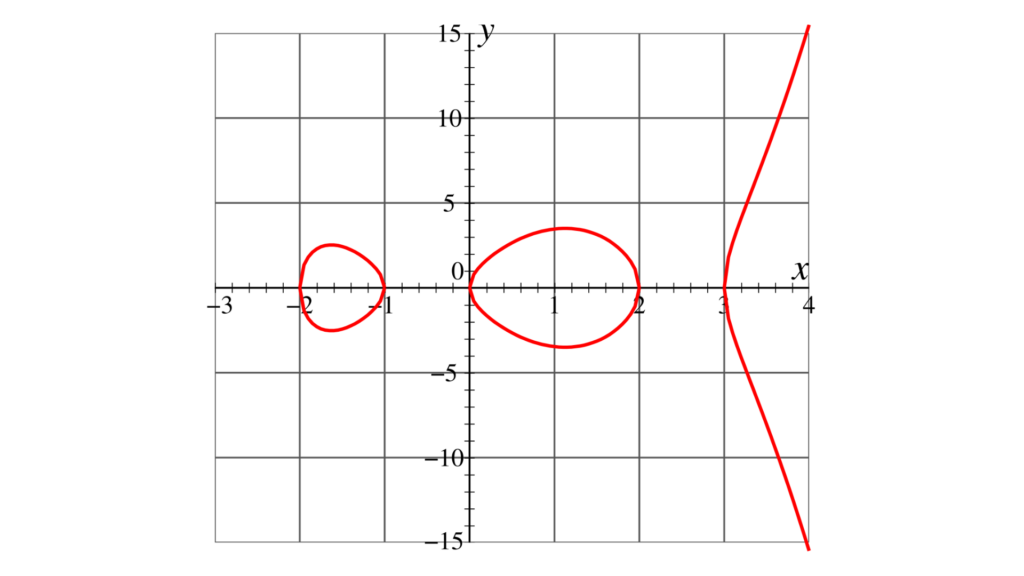
Arithmetic geometry sits at the intersection of number theory – the study of integers and whole numbers – and algebraic geometry, which studies geometric shapes defined by mathematical equations. Faltings is widely regarded as a towering figure who bridged these two worlds, transforming abstract geometric frameworks into tools capable of cracking centuries-old puzzles regarding whole-number solutions (Diophantine equations).
“People didn’t think that the problem was within reach of mathematical technology at the time,” said Helge Holden, Chair of the Abel Prize committee. “Then came this unknown and very young German, from a small university, and solved the problem.”
Faltings’ breakthrough was not just a standalone victory; it served as a critical stepping stone for subsequent monumental achievements in mathematics, including Sir Andrew Wiles’ landmark proof of Fermat’s Last Theorem a decade later.
Following his work on the Mordell Conjecture, Faltings continued to establish new methods that influenced research for generations. In 1989, inspired by alternative approaches to his theorem, he formulated the Faltings’ Product Theorem, a powerful analytical tool that allowed him to resolve another enduring mathematical riddle: the Mordell–Lang Conjecture. He has also made fundamental contributions to Hodge theory and the study of elliptic curves.
Born in Gelsenkirchen, West Germany, in 1954, Faltings demonstrated an extraordinary aptitude for mathematics from a young age, winning a national high school math competition before going on to earn his PhD. He held professorships at the University of Wuppertal and Princeton University before taking up a directorship at the Max Planck Institute for Mathematics in Bonn in 1994, transforming the institution into a global epicentre for arithmetic algebraic geometry. He transitioned to Director Emeritus in 2023.
The 2026 prize includes a monetary award of 7.5 million Norwegian Kroner (approximately €670,000 / £580,000). The formal award ceremony was held in Oslo on May 26, 2026, where Faltings received the medal from Crown Prince Haakon.
Faltings succeeds Japanese mathematician Masaki Kashiwara, who was awarded the Abel Prize in 2025 for his foundational contributions to algebraic analysis and representation theory.
You can find out more on the Abel Prize website.