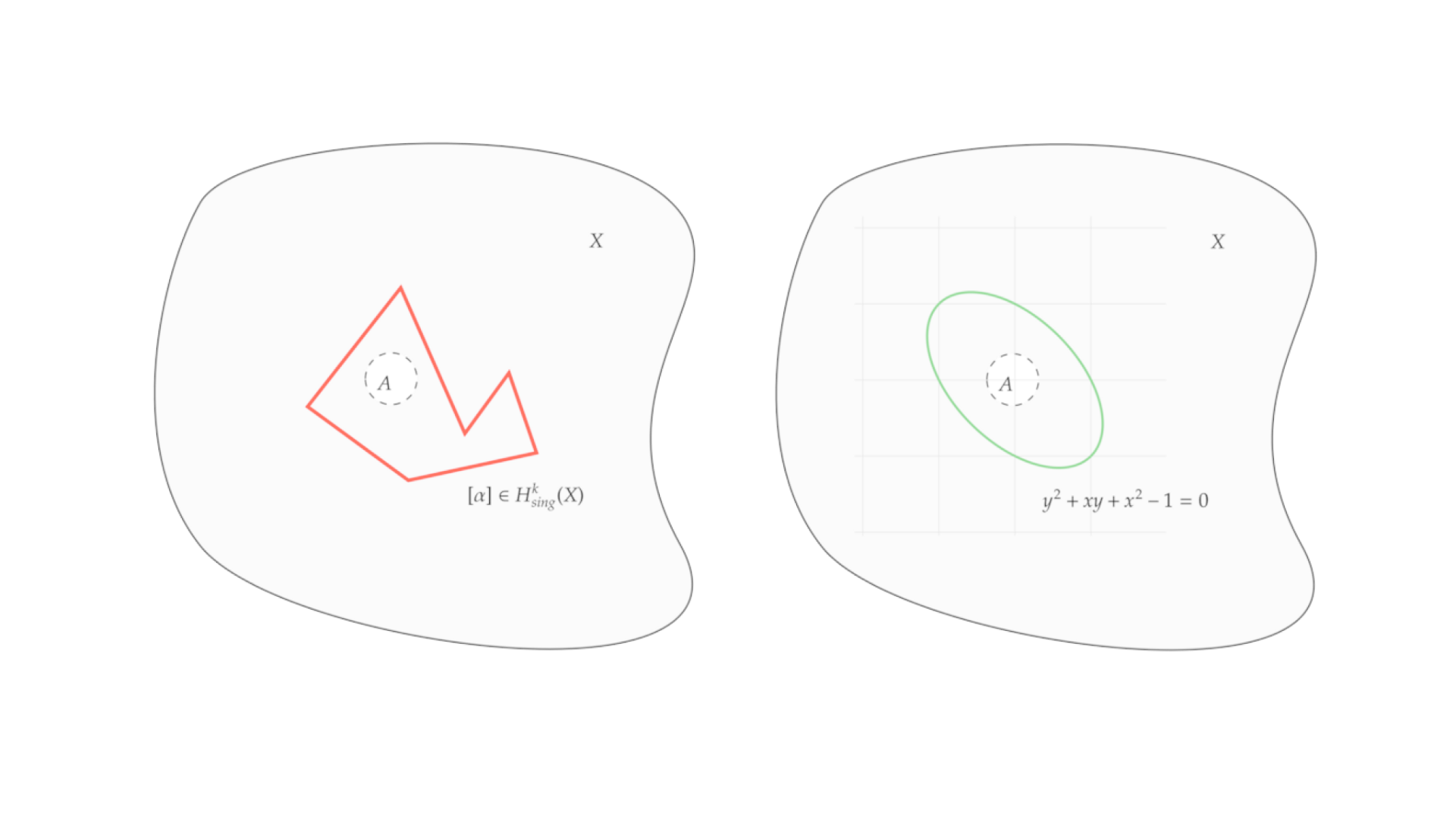
The Hodge Conjecture, one of the Millennium Prize Problems, is one of the most profound unsolved mysteries in maths. It aims to bridge the two major mathematical fields of topology, the study of shapes and data structures, and algebraic geometry, the study of shapes defined by polynomial equations.
Due to its complexity, the Clay Mathematics Institute named the conjecture one of the seven Millennium Prize Problems in 2000. Proving or disproving it therefore carries a $1 million reward. The conjecture remains unproved and it is often considered the most abstract and difficult to visualise of the seven sister problems.
In the 20th century, mathematicians developed mathematical tools to study shapes in higher dimensions that cannot be seen directly. Topology as a field measures a space by looking at its ‘holes’ and ‘shadows’. While highly flexible, this can often introduce abstract ‘Hodge classes’ that lack any clear geometric meaning. Algebraic geometry builds shapes rigidly from the ground up using ‘algebraic cycles’ – sub-shapes defined by polynomial formulae. The basic idea is asking to what extent we can approximate the shape of a given object by gluing together simple geometric building blocks of increasing dimension.
The technique became so useful it was generalised in many ways, leading to many powerful tools allowing mathematicians to make progress cataloging more and more odd objects they encountered. However, the origins of the procedure became obscured in these generalisations.
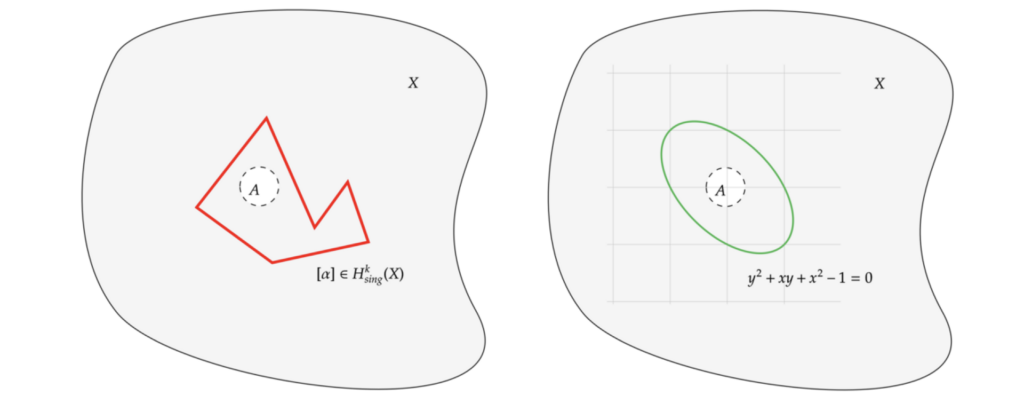
In 1941, Scottish mathematician Sir William Vallance Douglas Hodge proposed that for a particular class of ‘well-behaved’ shapes (complex projective algebraic varieties), any abstract topological piece exhibiting a specific internal symmetry, a ‘Hodge class’, is not completely abstract at all. Instead, it can be broken down into a combination of actual geometric subvarieties – if an abstract ‘shadow’ looks like it was cast by a real geometric object, that object must exist.
The answer to the conjecture determines how much of the topology of a solution set of a system of algebraic equations can be defined in terms of further algebraic equations. The Hodge conjecture is known in certain special cases, for example when the solution set has a dimension of less than four, but in dimension four it is unknown.
Mathematicians largely ignored Hodge’s claim until he addressed the International Congress of Mathematicians in 1950. Early attempts proving the conjecture ran into significant barriers. Hodge formulated the original problem using integer coefficients – this original version was proved false in the 1960s by mathematicians Michael Atiyah and Friedrich Hirzebruch providing counterexamples – so the conjecture has since been revised to use ‘rational numbers’, so including fractions. This modern version has been proven for specific low-dimensional cases. Prominent mathematicians like Pierre Deligne and Phillip Griffiths discovered strong evidence for the conjecture in the late 20th century, but a general proof for higher, four-and-above dimensions continues to elude researchers.
The Hodge conjecture is rooted in pure mathematics, so it has no direct real-world applications. You will not see it used to build consumer software or bridges tomorrow. But, much like lots of pure maths, the tools proving the conjecture could provide in theoretical physics, data science and broader mathematicians may lead to breakthroughs that affect us all in the future.
The conjecture is as yet completely unresolved, like all but one of the other Millennium Prize Problems – so if you can prove or disprove it, $1 million could be yours.