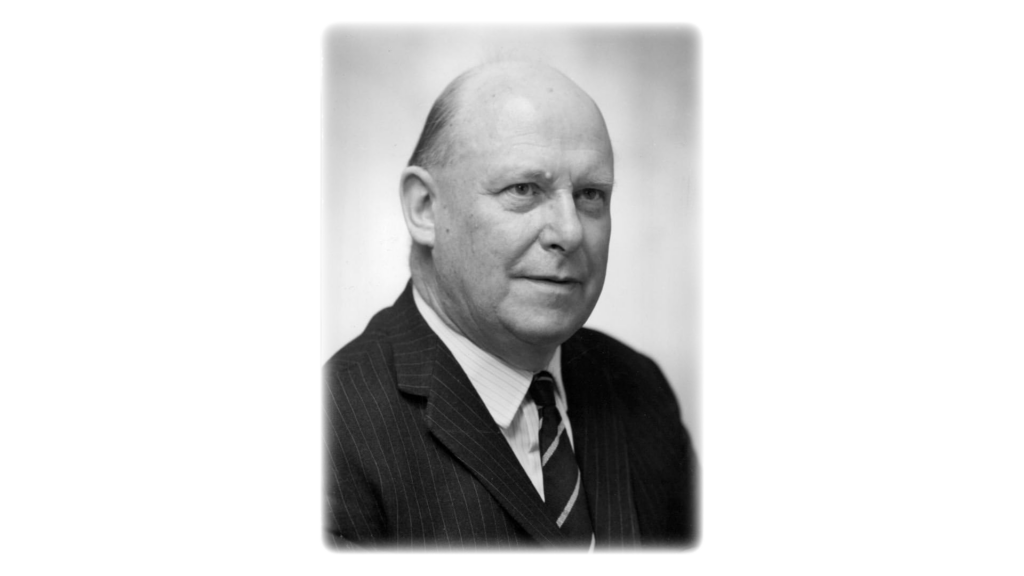
Sir William Vallance Douglas Hodge (1903–1975) was one of the most influential Scottish mathematicians of the 20th century. Best known for his work in algebraic geometry, differential geometry and topology. His ideas connected different areas of mathematics and led to what is now known as Hodge theory.
Early life and education
William Hodge was born on 17 June 1903 in Edinburgh, Scotland. As a young boy, Hodge attended George Watson’s College in Edinburgh, where he showed a particular talent for mathematics, like many of our other maths geniuses. His mathematical ability reached new heights under the guidance of his teacher Peter Ramsay, who encouraged his interest in the subject. Although Hodge originally considered entering the Civil Service, his exceptional performance in mathematics convinced him otherwise.
In 1920, Hodge entered the University of Edinburgh, where he studied mathematics under the famous mathematician Edmund Whittaker. He graduated with First Class Honours in mathematics in 1923. He then moved to St John’s College, Cambridge, to study the Mathematical Tripos.
At Cambridge, Hodge became fascinated by geometry. He was particularly influenced by the geometer Henry Baker, whose teaching opened up a completely new area of mathematics to him. Hodge performed extremely well and later won the prestigious Smith’s Prize for his mathematical work.
Early career
In 1926, Hodge became an assistant lecturer at the University of Bristol.
During this period, he began publishing important papers on algebraic curves, algebraic surfaces and mathematical analysis. His 1930 work on integrals brought him international attention.
Hodge’s ideas attracted the attention of Solomon Lefschetz, one of the leading mathematicians of the time. In 1931, Hodge travelled to Princeton University in the United States to work with him. Although Lefschetz initially believed that some of Hodge’s results were incorrect, Hodge eventually demonstrated that his mathematics was right. Lefschetz then recognised the importance of Hodge’s work.
Major achievements
Hodge’s greatest contribution was the development of what became known as Hodge theory. His work revealed deep connections between algebraic geometry, differential geometry, analysis and topology.
One of his most important ideas involved harmonic integrals, which helped mathematicians understand complicated geometric objects using analytical methods. His theory showed that information about the shape and structure of a geometric object could be connected with differential equations and other areas of mathematics.
His work was published in his influential 1941 book, The Theory and Applications of Harmonic Integrals. This became an important foundation for later developments in geometry.
Hodge also worked on algebraic geometry. Together with mathematician Daniel Pedoe, he produced the Methods of Algebraic Geometry.
The Hodge conjecture
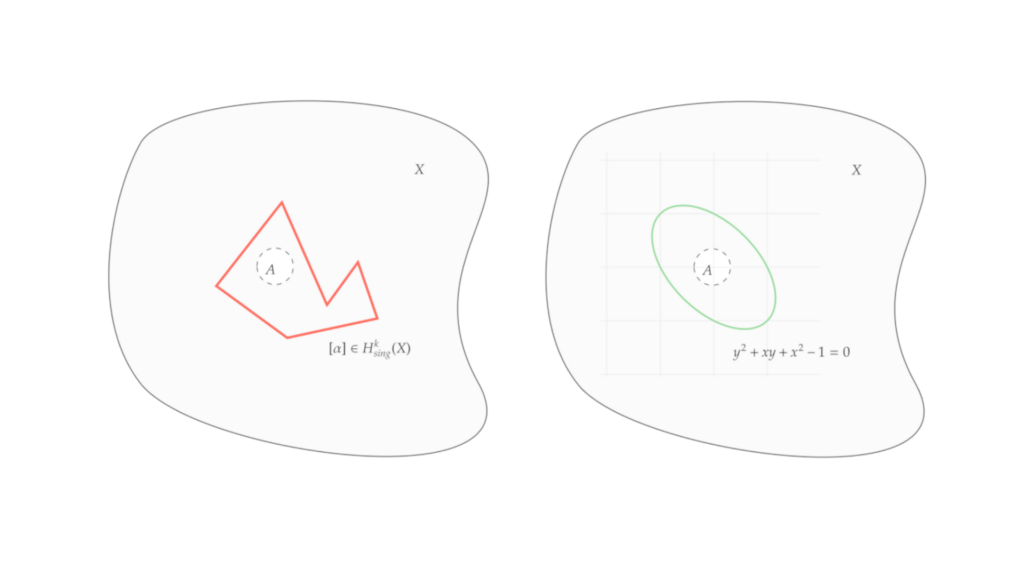
One of the ideas associated with Hodge is the Hodge conjecture, a famous problem in mathematics concerning the relationship between the topology and algebraic structure of geometric objects.
The conjecture has remained unsolved in its full generality. It is considered so important that it is one of the seven Millennium Prize Problems selected by the Clay Mathematics Institute.
The problem demonstrates the lasting influence of Hodge’s ideas. Even decades after his death, mathematicians continue to investigate questions that emerged from his work.
Later life and honours
In 1936, Hodge became the Lowndean Professor of Astronomy and Geometry at the University of Cambridge, a position he held until 1970. He was elected a Fellow of the Royal Society in 1938.
Throughout his career, Hodge received many major honours. He was awarded the Adams Prize, the Senior Berwick Prize, the Royal Medal and the De Morgan Medal. In 1974, shortly before his death, he received the Copley Medal, one of the Royal Society’s highest honours, for his pioneering work in algebraic geometry.
Hodge was also knighted in 1959. He became Master of Pembroke College, Cambridge, in 1958 and remained in the position until his retirement in 1970. He also played an important role in international mathematics and helped establish stronger connections between mathematicians around the world.
Legacy
W. V. D. Hodge died in Cambridge on 7 July 1975, at the age of 72.
Hodge was not only an outstanding mathematician but also an important academic leader. His theories continue to influence modern algebraic geometry, topology and differential geometry, while the Hodge conjecture remains one of the great unsolved problems in mathematics.
William Vallance Douglas Hodge will forever be remembered as one of the mathematicians who helped connect different worlds of mathematics.